
Proportionmaxxing: The Ratios That Actually Matter (and the 1.618 Lie)
Looksmaxxing
Ratio Brain
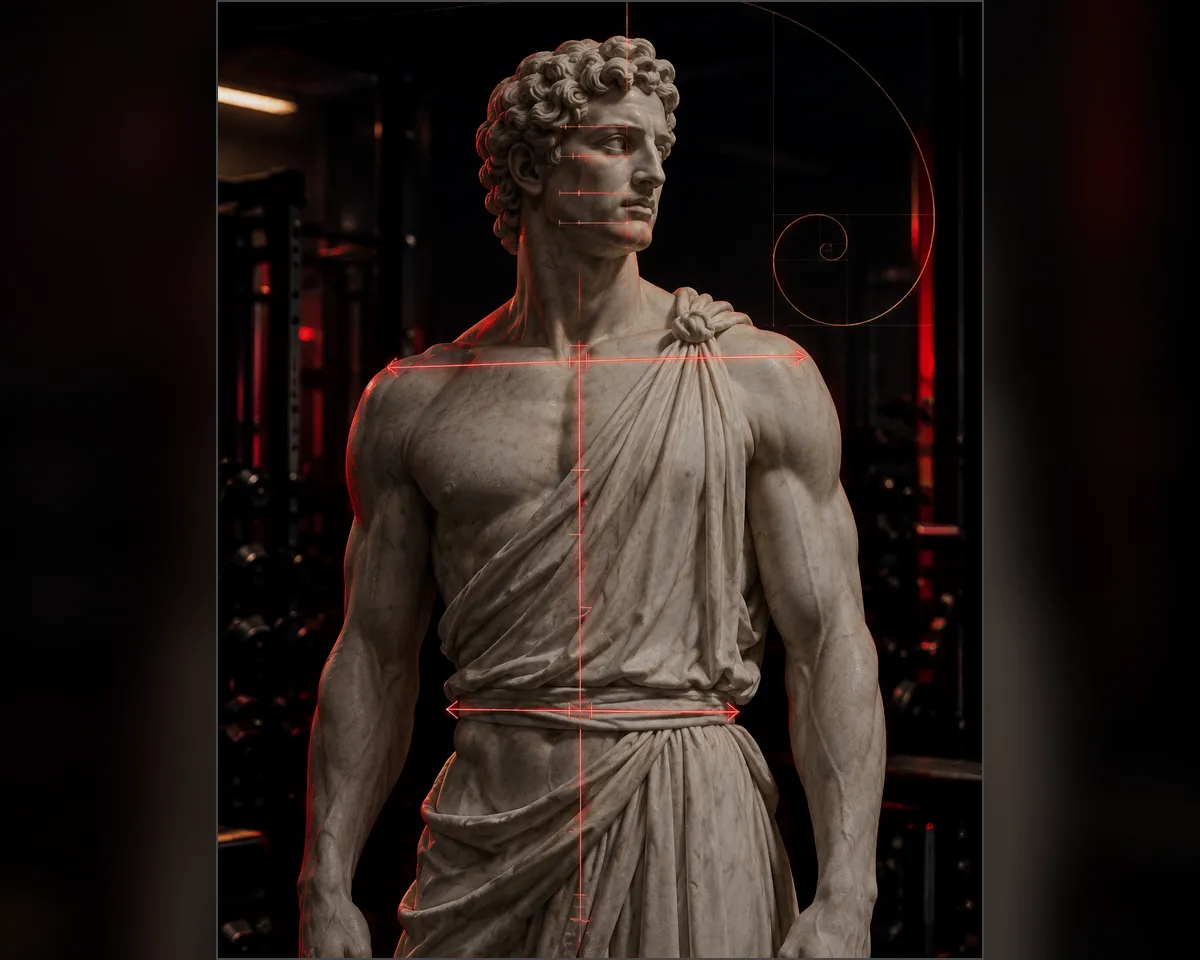
Proportionmaxxing is ratio brain for your face and body. A few ratios matter. Most of the numbers the feed sells you are camera distortion or marketing.
Key takeaways
- Proportionmaxxing means chasing better visible ratios: shoulder-to-waist, leg-to-torso, facial thirds, jaw width, the whole tape-measure lifestyle.
- One ratio has real evidence behind it: upper-body width against waist. The famous 1.618 golden ratio does not, for faces or bodies.
- Most of the fix is muscle, waist, posture, clothes, hair, and taking photos from far enough away that your camera stops lying.
What proportionmaxxing actually means
Proportionmaxxing is not one guru's system. It is an umbrella word for the part of looksmaxxing that stopped asking 'am I attractive' and started asking 'are my ratios correct.' Shoulder-to-waist. Leg-to-torso. Neck-to-head. Facial thirds. Jaw width. Eye tilt. Everything gets a number, and every number gets a target.
It overlaps with stuff you already know. Framemaxxing is the shoulder-width branch. Frame-mogging is the meme version where a wider guy walks in and ends your whole photo. Heightmaxxing chases total height, not ratios. PSL is the forum rating scale that turns all of it into a score, and the mogging dictionary covers the rest of the vocabulary.
The difference with proportionmaxxing is the obsession with relationships between parts. Not 'are my shoulders big' but 'are my shoulders big compared to my waist, my head, my hips.' That framing is half useful and half a trap, which is the point of this whole post.

Why ratio talk is everywhere right now
Maxxing culture is officially mainstream. Dictionary.com named 'maxxing' its 2026 Word of the Year in late October, after usage of maxxing words spiked hard through the summer. Once everything is a maxx, the next step is measuring the maxx.
Clavicular's Camp Looksmax made that literal. The seven-day Los Angeles camp in October was streamed nonstop on Kick, and reporting on it described attendees getting their height and body measurements taken, plus shoe lifts and stretching to look taller, with jaw-surgery presentations on top. That is proportionmaxxing as a live product.
Numbers also travel well. A ratio feels objective in a way 'you look kind of tired' never will. That is the same hook behind AI face-rating apps like UMAX: give insecurity a number and it suddenly feels fightable. The problem is that many of the numbers are fake precision.
The ratios ranked by actual evidence
Not all ratios are equal. Some have real research behind them. Some are fitness marketing wearing a lab coat.
- Upper-body width vs waist: strongest evidence. A 2017 study found that how strong a man's upper body looks explained more than 70% of the variance in how attractive his body was rated. Add height and leanness and it gets close to 80%. This is the V-taper, and it is the ratio worth caring about.
- Leg-to-torso: some evidence, mostly fixed. Studies across many countries found legs slightly longer than average rated a bit better, while extreme lengths rated worse. Results for men are mixed, and adult leg length is not trainable.
- Facial averageness and symmetry: real but boring. Faces blended into a composite average are usually rated more attractive than most of the real faces that went into them. Average here means balanced, not forgettable.
- The golden ratio face (1.618): myth. Researchers who tested ideal eye-to-mouth distance and eye spacing found the most attractive ratios matched an average face, not phi. A systematic review found no meaningful link between golden proportions and facial attractiveness scores.
- The Adonis index (1.618 shoulder-to-waist): marketing. The direction is real, wider shoulders and a smaller waist. The magic number is not from research.
- FWHR (facial width-to-height ratio): overhyped. A study of more than 137,000 people found no meaningful link between FWHR and dozens of self-reported behavior traits, so the dominance lore is mostly forum fiction.
- Canthal tilt: thin evidence. The research people cite is small and leans on edited photos. Not worth an identity crisis.
The selfie trap: your camera is lying about your ratios
Before you measure anything on your face, know this: a selfie taken around 12 inches away makes the base of your nose look roughly 30% wider than a photo taken from about 5 feet. Researchers measured it. Close lenses stretch the center of your face and shrink your ears and jaw.
That means most face-ratio apps are partly measuring your phone, not your face. Same skull, different arm length, different 'harmony score.' If an app gives you a new number every time you move, it is a lens test.
- Shoot from about 5 feet away using the 2x lens, or a timer with the phone on a shelf.
- Keep the camera at eye height, same room, same light, every time.
- Neutral face, relaxed jaw, no flexing. Baseline photos are evidence, not content.
- Compare photos to photos taken the same way. Never compare a mirror selfie to a friend's DSLR shot.
What you can actually change
Bone length is mostly locked once you finish growing. Visual proportion is not. Here is where the movable points are.
- Side delts and lats: this is how shoulders get wider without new bones. Lateral raises, pull-ups, pulldowns, and rows, for months. The framemaxxing guide linked above has the full training split.
- Waist: losing body fat shrinks the waist, which makes the same shoulders read wider. Half of the V-taper is subtraction.
- Posture: rounded shoulders and a forward head make your frame read smaller and your neck read weaker. Upper-back work and less laptop folding fix more than you think. More on that in jawline, skin, and posture without surgery.
- Clothes: shoulder seams on the shoulder, a slight taper at the waist, and trousers with a higher rise make legs look longer and fix a lot of leg-to-torso complaints instantly.
- Hair and beard: volume on top and tighter sides change how your face reads in thirds. A beard shaped along the jaw changes how wide and sharp the lower face looks.
- Leanness: a lower body fat shows the jaw, cheekbones, and waist taper. Nothing else on this list stacks as many visual wins at once.
How to measure without spiraling
If you want numbers, use honest ones. Most ratio content mixes up shoulder circumference (a tape around your delts) with shoulder width (bone to bone). Circumference is what training changes, so track that.
Measure shoulders at the widest point of your delts, arms relaxed. Measure waist at the navel, relaxed, not sucked in. Divide shoulders by waist, or let the shoulder-to-waist ratio calculator do it. Write it down once a month, not every morning. The number that matters is the direction, not hitting 1.618.
Take the same photo set the same day: front, side, back, full body, face, from the same distance. If your ratio improves and the photos look better, you are winning. If the ratio improves and you still hate every photo, the issue is probably not your proportions.
Red lines: proportion hacks that can wreck you
The darker side of proportionmaxxing is trying to change bone. That is where the feed gets dangerous.
- Limb-lengthening surgery: surgeons in England reported in June 2026 that patients who had cosmetic leg lengthening abroad came back with implant failure, poor bone healing, severe joint stiffness, and deformity, needing about ten hospital contacts each.
- Testosterone or steroids as a teen: anabolic steroids can close growth plates early, which can leave a teenager shorter for life. That is the opposite of heightmaxxing. Clavicular has said publicly he started testosterone at 14. Do not copy it.
- SARMs: the FDA has warned that bodybuilding products with SARMs are linked to liver damage, heart attack, and stroke. Not a shortcut to a V-taper.
- Bonesmashing: hitting your face to 'grow' bone is injury cosplay. Harvard public health experts flagged ER visits from it in October 2026. Full breakdown in the bonesmashing truth.
- Random peptides: unapproved research peptides carry infection and organ risks with almost no human data for looks. See the peptide stack hype.
- Jaw surgery from a pitch: orthognathic surgery is a real medical procedure for bite and airway problems, decided with a surgeon. It is not something to buy because a camp presentation made your chin feel like a bug.
How AscendMe would run proportionmaxxing
The useful version is quiet: a baseline photo set from five feet, monthly shoulder and waist measurements, a training block built around side delts and lats, a waist trend from diet and steps, posture work, and a closet audit for fit.
Ascend AI's job is to turn that into a weekly review, not a verdict. Your ratio is a trend line, not a rating. That is the softmaxxing path, and it is the one that still works in a year.
Receipts
A few outside sources worth opening if you want the less-forum, more-grounded version.
- Sell et al. (2017) on upper-body strength and male attractiveness
- Pallett, Link & Lee (2010) on new golden ratios for facial beauty
- Langlois & Roggman (1990): attractive faces are only average
- Ward et al. (2018) on selfie distance and nasal distortion
- Royal College of Surgeons of England on cosmetic leg lengthening
- NIDA on anabolic steroids and growth in teens
- Harvard Chan School on looksmaxxing health concerns
- ABC News on 'maxxing' as Dictionary.com's 2026 Word of the Year
- Mashable via Yahoo on Camp Looksmax
- USA Today via AOL on what Camp Looksmax attendees paid for
- Fox News on Clavicular starting testosterone at 14
Frequently asked questions
What is proportionmaxxing?
Proportionmaxxing is the looksmaxxing habit of improving visible ratios, such as shoulder-to-waist, leg-to-torso, and facial thirds. The useful version focuses on what you can change: shoulder and back muscle, waist size, posture, clothes, hair, and photo distance.
What is a good shoulder-to-waist ratio for men?
There is no research-backed magic number. The popular 1.618 Adonis index comes from fitness marketing. Research does show that a wider-looking upper body and a smaller waist make men's bodies rate as more attractive, so track whether your ratio moves in that direction.
Is the golden ratio face real?
Not in the way the internet claims. Studies found the most attractive facial ratios match an average, balanced face rather than 1.618, and a systematic review found no meaningful link between golden proportions and attractiveness scores.
Can you change your body proportions as an adult?
You cannot safely change bone length, but you can change visual proportions. Building side delts and lats, losing waist fat, improving posture, and wearing clothes that fit the shoulders and waist all change how your proportions read.
Do face ratio apps work?
Only partly. Close selfies distort the face, making the nose look about 30% wider at 12 inches than at 5 feet, so many face-ratio scores change with camera distance. Use consistent photos from about 5 feet away if you use them at all.
Is limb-lengthening surgery safe?
It carries serious risks. Surgeons in England reported patients returning from cosmetic leg lengthening abroad with implant failure, poor bone healing, joint stiffness, and deformity. It is not a looksmaxxing shortcut.
Does taking testosterone make you taller?
No. In teenagers, anabolic steroids can close growth plates early, which can reduce final adult height.
Filed under
Looksmaxxing · proportionmaxxing / ideal male body proportions / shoulder to waist ratio