
Peptides for Looksmaxxing: Vial-Core Hype Needs Adult Supervision
Fitness
Vial Core
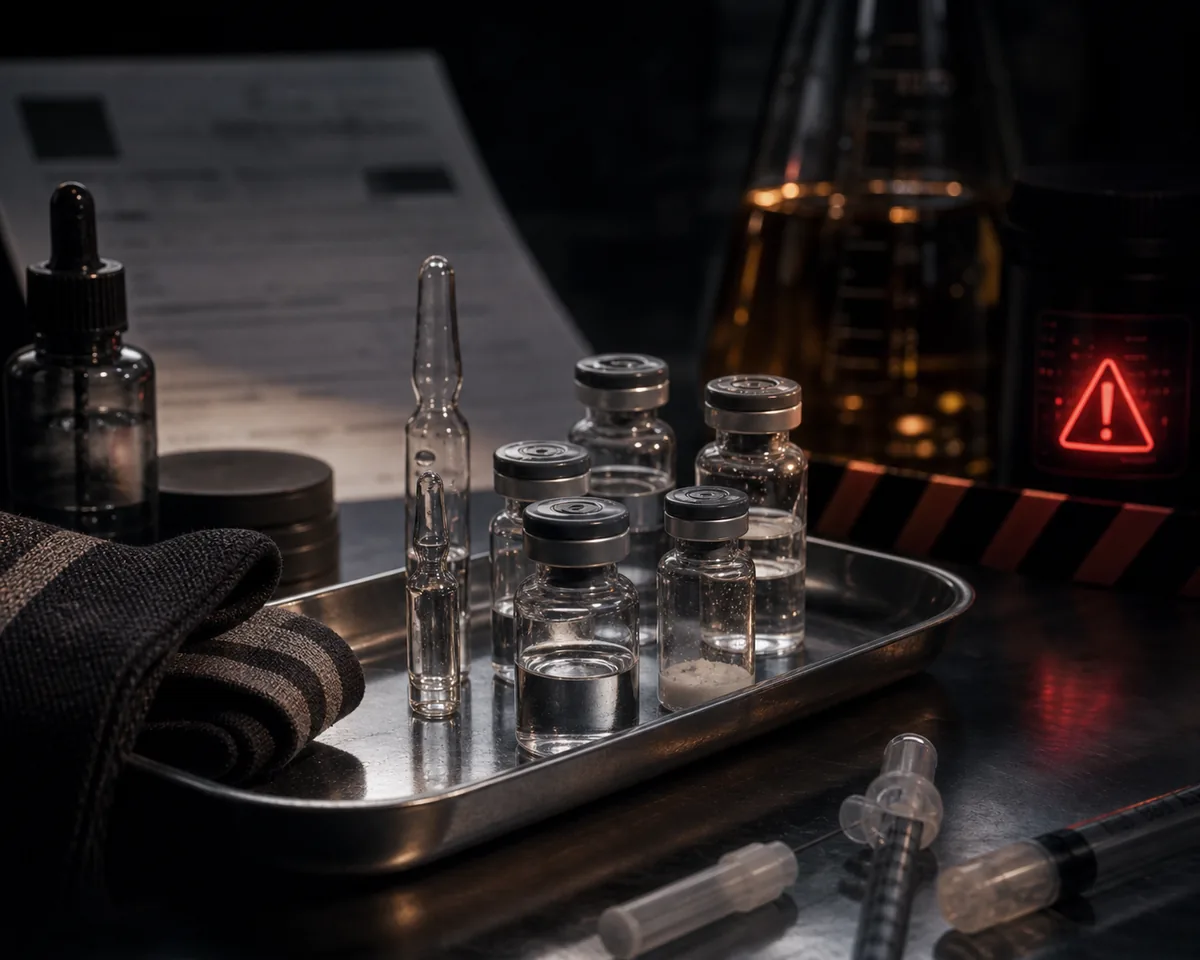
Peptide discourse is everywhere: BPC-157, TB-500, GHK-Cu, GLP-1s, recovery, skin, fat loss. Some is medicine. Some is sketchy vial cosplay.
Key takeaways
- Peptides are not one category. A cosmetic copper-peptide serum, a prescription GLP-1, and a research vial from a weird site are not the same conversation.
- The looksmaxxing feed mashes them together because the words sound expensive, scientific, and forbidden.
- No dosing, no sourcing, no injection cosplay. If it is medical, bring a licensed clinician into the room.
Why peptide hype is so loud
Peptides hit every insecure male fantasy at once. Heal faster. Lose fat. Keep muscle. Improve skin. Recover like a cyborg. Sleep better. Age slower. The pitch sounds like someone shoved the entire glow-up wish list into a tiny vial.
That is why the feed loves it. A compound name feels smarter than 'sleep eight hours.' A vial feels more elite than rehab. The problem is that chemistry does not care about your aura tier.

Put peptide talk into three buckets
- Cosmetic bucket: topical ingredients like copper peptides in skincare. Usually a routine discussion, not a secret lab arc.
- Medical bucket: prescription drugs like GLP-1 medications, handled by clinicians for specific patients.
- Grey-market bucket: research chemicals, wellness-clinic stacks, and sites calling things 'not for human use' while winking at customers.
- Sport-risk bucket: compounds that may be banned in tested sport or flagged by anti-doping bodies.
Names you keep seeing
BPC-157 gets pushed for healing and injury recovery. USADA says it is experimental, not approved for human clinical use, and prohibited for tested athletes. TB-500, CJC-1295, ipamorelin, sermorelin, and tesamorelin show up in the same wellness and performance conversations.
GLP-1s are a different lane. FDA-approved versions exist for specific uses, but the FDA has been loud about unapproved or compounded GLP-1 products, dosing errors, storage issues, fake labels, and online sellers pushing research-use products directly at humans.
Red flags before you get main-character poisoned
- The seller says 'research only' while the comments discuss human use.
- No licensed clinician, no prescription, no pharmacy you can actually verify.
- Influencer code plus miracle claims.
- People talk about stacks but cannot explain the risk profile.
- You are trying to fix sleep, training, or diet problems with a needle.
The boring base game still mogs
Most guys asking about peptides are under-recovered, under-slept, underfed on protein, inconsistent in the gym, and allergic to stretching. That is not a peptide deficiency. That is a routine deficiency.
Run the base stack first: lift, steps, protein, sleep, sunlight, rehab, dental, skincare, real food, less alcohol, fewer 2 a.m. phone loops. Then, if there is a legitimate medical reason, talk to someone qualified.
Receipts
A few outside sources worth opening if you want the less-forum, more-grounded version.
Frequently asked questions
Are peptides safe for looksmaxxing?
Depends on the compound, source, dose, person, and supervision. Some are prescription medicines. Some are experimental or grey-market products with real risk.
Is BPC-157 approved for human use?
USADA says BPC-157 is not approved for human clinical use by any global regulatory authority and is prohibited for tested athletes.
Should I use peptides for recovery?
Do not self-experiment from online hype. Fix sleep, training load, nutrition, and rehab first. For medical questions, use a licensed clinician.
Filed under
Fitness · peptides / BPC-157 / TB-500